‘Adam knew his wife Eve’
I gave the following talk at the Hildebrand Project Giornata di Studio, on May 18, 2026 in Rome, on the personalist contributions of Dietrich and Alice von Hildebrand to the document ‘Uno caro: In Praise of Monogamy’ (Dicastery for the Doctrine of the Faith).
Abstract. I propose that our understanding of ancient biblical terminology defining marriage and the marital act, ‘one flesh,’ ‘to cling,’ and ‘to know,’ is brought to greater clarity when interpreted from the perspective of an insight shared by Dietrich and Alice von Hildebrand and proposed in the DDF document, Uno caro, namely, that ‘the tenderness of affection between spouses plays a fundamental role, willed by the Creator’ (§ 47) In this paper, through an analysis of the spousal ‘we’ (the first person plural of the marital bond) from the perspective of the attentionality and intentionality of sexual knowing, I show 1) how such knowing is consummated (i.e., perfected) by spousal tenderness, 2) how the reciprocal clinging of spouses is secured by this same tender knowing, and 3) how the ‘one flesh’ union of marriage is then readied to attain its proper proportions as a singular kind of communio personarum.
What does it mean to become ‘one flesh, una caro’?
In an obvious sense, it makes no sense, for a man and a woman can never become one living body, if by this we are to understand a singular bodily whole. Though husband and wife unite most closely in the marital act, they again separate and live life as two distinct bodily wholes, even while remaining united by the marital covenant.
Is the teaching of Sacred Scripture then figurative, is it simply a poetical kind of speaking that strives to communicate the profundity of spousal union without signifying anything substantive? I think not. Though the phrase is certainly poetic, and though it undoubtedly contains figurative significance, we have here an expression with literal force. Accordingly, I will today take this literality for granted while I strive to discover what it means when so taken. And to begin I will approach by turning to an actual poetic insight that also communicates a literal truth, and indeed the same truth communicated in the phrase under consideration. In one of his most famous sonnets, 116, Shakespeare muses,
Let me not to the marriage of true minds
Admit impediments; love is not love
Which alters when it alteration finds,
Or bends with the remover to remove.[1]
Now, I submit to you that this reference to the ‘marriage of true minds’ alights on the very truth revealed in Genesis, and precisely inasmuch as the meaning of marriage as ‘one flesh’ is clarified in the later verse, ‘Adam knew his wife Eve, and she conceived and bore a son, saying, “I have gotten a man with the help of the Lord.”’ (Gen. 4:1). As Pope John Paul II explains in the Theology of the Body, use of the verb ‘to know’—yāḏaʿ (יָדַע) in Hebrew, égnō (ἔγνω) in Greek—specifies the sexual act as a personal act, and thus something that not only involves the flesh and its satisfaction but which also engages the spiritual depth of the person, together with their deepest desire ‘to love and be loved’ in the words of Augustine.[2] Though the bodily dimension of the act is most evident, at least when viewed from the outside, scripture makes it clear that the inner dimension finally determines the act as something genuinely human.
But how are we to understand this? Is it merely a matter of the couple knowing what is happening—knowing ‘what’ the act is and ‘with whom’ it is being performed—and then consenting to what is happening on the basis of this knowing? Of course not. Though these personal features are centrally significant, they are surely not all that scripture reveals in identifying sex as a knowing act; and neither are they sufficient toward living the fullness of sexual union in a personal way. Accordingly, I submit that the answer to the meaning of this verb choice, ‘to know,’ and together with it the verb ‘to cling,’ and the consequent state of being ‘one flesh,’ is to be found in spousal tenderness, precisely as proposed by Dietrich and Alice von Hildebrand.
So, let us begin our reflections with paragraphs 46 and 47 of the document, Una caro: In Praise of Monogamy, from the Dicastery of the Doctrine of the Faith (DDF) where we find the following references to the personalist insights of the von Hildebrand couple,
In the marital union, von Hildebrand emphasizes two indispensable attitudes. The first is ‘discretio,’ that is, a space of personal privacy that preserves each person’s identity and freedom, but which can be shared with complete freedom, leading, in this case, to a deepening of the bond. The second attitude is ‘reverence’ for the other, which, especially in the sexual union, manifests the fact that one loves a person, sacred and inviolable, and not a mere object. The inner dynamism of the marriage bond—the ‘we,’ in von Hildebrand’s terminology—impels spouses to express their intimate personal communion in an ever-fuller manner.
This vision is also shared by Alice von Hildebrand (née Jourdain), Dietrich’s wife. She maintains that the full realization of humanity can only be attained in the union of man and woman, the ‘divine invention’: ‘Not only did He [God] make man to be comprised of soul and body—a spiritual reality and a material one—but moreover, to crown this complexity, “male and female he created them.” Clearly, the fullness of human nature is to be found in the perfect union between man and woman.’ For this reason, the Belgian philosopher and theologian considers the spousal love between a man and a woman to be the pinnacle of the human vocation: the highest expression of the divine image as a call to self-gift in love, where the tenderness of affection between the spouses plays a fundamental role, willed by the Creator. “The heart is the very center of the person.”’[3]
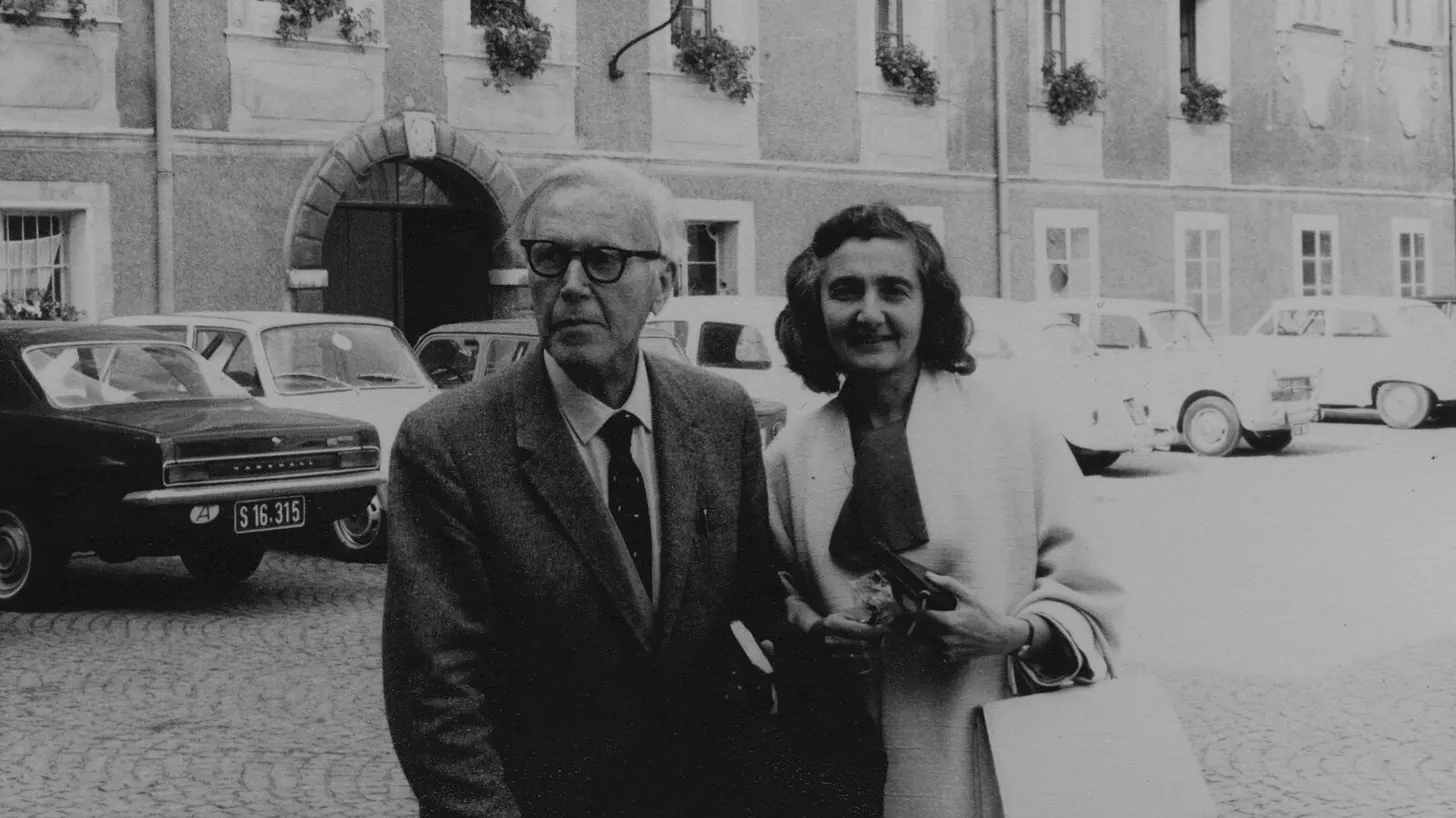
Now, should we read these paragraphs carefully—which I advise—we find a series of characteristically personalist notions: discretion, privacy, and identity; reverence, sacrality, and inviolability; subjectivity, interiority, and intimacy, all of which inwardly orient us towards the culminating notion of spousal tenderness, the apex of married life—or, at least, that is my suggestion today. So considered, these paragraphs can be read as an appeal to that tenderness of affection that completes—one might even say, consummates—the spousal ‘we’ formed of loving self-gift.
Accordingly, I will proceed by following the very same logic, by first detailing the structure of the spousal ‘we,’ before moving on to an exposition of the act of empathy and empathetic participation, by which I maintain spousal knowing is inwardly fulfilled, before turning toward how such knowing and clinging is perfected in spousal tenderness, and therefore how the ‘one flesh’ union of marriage achieves its proper proportions via this same tender-clinging-knowing.[4]
I. The Spousal ‘We’
When a man and a woman consent to marry, before one another, society, and God, and then consummate their vow in sexual union, they are joined by God in an indissoluble bond whose inner structure is the spousal ‘we.’ Marriage is then a personal bond, formed of the persons so bonded—so that, indeed, marriage is the spousal ‘we’ itself.
This spousal ‘we’ is then the ground of an expansive relationship that possesses many dimensions, the most foundational of which is spousal friendship. Such friendship undergirds marriage as its inner core, even while marriage outstrips friendship ordinarily considered. As clearly detailed by Aristotle and Aquinas, friendship is constituted by two individuals turning toward one another in mutual recognition and affirmation, together with a communal striving for goodness together with and for one another.[5] This structure and content is then neatly summarized by Wojtyła when he says, ‘love is a reciprocal relation of persons, of a woman and a man, based on some relation to the good.’[6]
Yet, while this bearing toward one another and the good establishes an objective reality of great import, the subjective dimension is more foundational. Accordingly, when Aquinas investigates friendship he defines it as ‘mutual indwelling,’ and by this understands the abiding of friends in one another by intellect and will—thus accomplishing a personal adherence to one another by spiritually inhering in one another.[7] Yet marriage goes still further, for in marriage, unlike in other friendships, this mutual indwelling encompasses the whole of the persons, all of them and for all of life, and is thus a mode of indwelling that travels to the furthest extent possible (at least naturally). Hildebrand then takes up this phrase of Aquinas and explicitly applies it to marriage, when he maintains that pure and reverential spouses ‘love each another from the depth of their being, are kept in mental contact by a complete understanding, and see each other, so to speak, by a mutual indwelling of their souls.’[8] This same reality is then also described in characteristically personal terms by Wojtyła when he says, ‘Two-sided love creates the most proximate basis for two “I’s” to become one “we”… where ‘your “I” becomes in a sense mine; it lives in my “I” as my “I” does in itself.’[9]
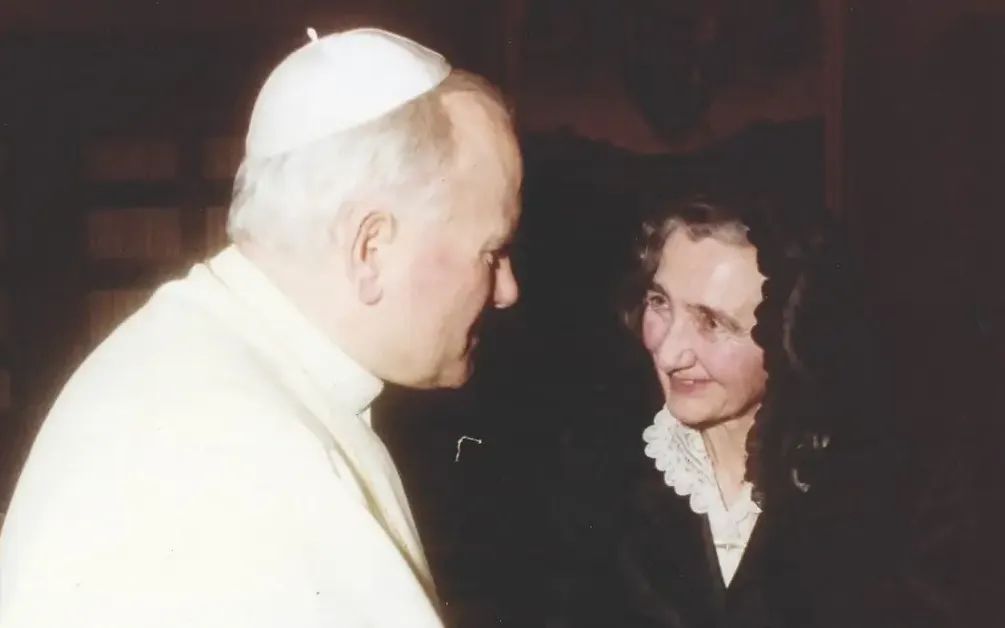
Now, with this collection of personalist insights, we come to the primal structure of spousal friendship, according to which spouses become one subject of their married life together, with a unity that is interiorly grounded, while coming to exterior expression in various bodily actions—and thus realize their own concrete spousal ‘we.’ And with this we have a first meaning of marriage as ‘one flesh,’ according to which marriage encompasses everything outward, bodily, and objective, while being wholly animated by what is inward, spiritual, and subjective.[10] But is this all there is to the mutual indwelling of spouses? Is the unity of the couple fulfilled by such a mutuality of knowing and willing, while also being embodied in their practical actions, including the most vivid and vibrant, the sexual? I would say no. Though this form of being one is surely foundational, it does not exhaust the meaning of the spousal ‘we,’ and precisely because such an embodied knowing and willing does not yet include something characteristically personal, for the couple would then lack that ‘tenderness of affection’ that ‘plays a fundamental role, willed by the Creator.’ Therefore, we must look a little closer at the nature of the spousal ‘we,’ and we must do so by taking an excursus through the ‘act of empathy’ and the corresponding experience of ‘participation’ before returning to a fuller understanding of tenderness itself.[11]
II. Empathy and Participation
Stein maintains that all personal interrelationality rests on the cognitive act she calls empathy, and which she defines as ‘the perceiving of foreign subjects and their experience.’[12] So considered, empathy is that act by which we encounter one another as personal subjects, in a subjective way, while also being capacitated to enter into the experience of one another. It is then precisely by virtue of the act of empathy that we encounter one another as centers of consciousness, rational and free, and thus as other selves with whom we can enter into friendship.[13] Since we are not mere objects but are also personal subjects, it is of utmost importance that we experience one another in this way. Through empathy we learn to inhabit the same world together with one another, and through empathy we come to participate in the humanity of one another. Inhabiting and participating, these are the keys that unlock the possibility of friendship: The former is necessary for living a common life together with others, and the latter is essential toward living this same communal life in a fully personal way. Indeed, the latter can rightly be called the beating heart of every genuine ‘I-Thou’ relationship; which is so important for Wojtyła that he will maintain, in most forceful terms, ‘the central problem of life for humanity in our times, perhaps in all times, is this: participation or alienation?’[14]

Now, if this is true in general, then it must also be true of marriage, and with even greater force—such that we can then reformulate the exclamation as, ‘the central problem for marriage in our times is this: participation or alienation?’ Since alienation from one another is evidently the opposite of clinging to one another, and since genuine sexual knowing is precluded by any kind of interpersonal alienation, empathetic participation simply must animate the spousal ‘we.’[15] Indeed, seen from this perspective, that of lived experience, we see that there is in fact no genuine spousal ‘we’ without the inclusion of the experiential. It is simply not enough to cling to one another by intellect and will without this clinging also embracing the interior depth of one another via the couple’s empathetic participation in one another. Therefore, we can say that it is precisely through such an intersubjectivity of lived experience that spouses complete their interpersonal knowing, while also grounding all other forms of interpersonal knowing in this experience of one another as personal subjects.
Now, after this excursus into the nature and necessity of empathic participation, we can begin to unfold an understanding of spousal tenderness that leads us right to the heart of the biblical understanding of marriage.
III. Spousal Tenderness
When the sacred text puts sexual intercourse before us as an act of knowing, we can immediately discern that as an experiential kind of knowing sex includes both attention and intention: attention, inasmuch as spouses are naturally attentive to one another, body and spirit, by both desire and right, and intention inasmuch as spouses naturally intend one another as objects of reciprocal delight, again body and spirit, and again by both desire and right.[16] This is the expansive kind of knowing sought by the human heart, the spiritual center of human life, because it is only in and through such knowing that spouses enter into the fullness of their experience of one another, and thus take joy in the consciousness of one another’s being.[17] It is then my contention that such sexual knowing achieves its proper character only when it becomes mutual tenderness, which is realized when empathetic participation in one another’s sexual experience is paired with signs and gestures that communicate their understanding to one another. To see why this is case, we need first only follow through on the etymology of the terms: attention, intention, and tenderness, according to which we discover their close relation via their common Latin root, ‘tendere,’ which signifies both a ‘stretching forth’ and a ‘holding fast’—with each term then coming to signify a different modality of ‘stretching forth’ and ‘holding fast.’ First, when spouses attend to one another, they focus on one another in such a way that the whole of their consciousness is absorbed in one another’s vulnerable nakedness, in body and spirit. Then, when spouses intend one another, they reciprocally take in the whole glory of one another, again in body and spirit. Finally, this is all brought to completion when spouses are tender with one another, when they complete their sexual knowing with empathetic participation, while also communicating their reciprocal understanding to one another with manifold bodily gestures that heighten their joy in one another.[18]

Sexual knowing is then an everything kind of knowing, which includes the whole of the human person as a body-spirit composite, in the objectivity of the body and its vivid sexual value, together with the subjectivity of the person and its delightful personal value.[19] Hildebrand captures all this wonderfully when he explains how tenderness essentially involves ‘dwelling with the object of love’ together with an ‘entrance into the sanctum of the personality,’[20] while also embodying this entrance with various signs of tenderness. As he puts it, ‘tenderness urges me, as it were, to envelop in loving kindness every feature of the beloved’s being,’ even ‘to the minutest recess of his personality,’ in a ‘desire, as it were, to fuse myself with his essential form, and repeat the acts in which his spirit expresses itself.’[21] Certainly a beautiful personalist exposition of the significance of the sexual act; but let us make it all utterly plain: When spouses complete their reciprocal knowing in mutual tenderness, via empathetic participation in one another’s subjective experience, their union takes on the character of a rejoicing in one another’s joy in one another—with the wife taking joy in her husband’s joy in her, and the husband likewise taking joy in his wife’s joy in him.
Such tender reciprocity then forges a new dimension of the spousal ‘we,’ wherein their singular joys expand to encompass one another while also crossing-over into one another, so that their at first singular joys interweave and become a thoroughly unified rejoicing. In this way, spouses, already united as the singular subject of their married life, intellectually and volitionally, become further united as the singular subject of their marital experience, through the expansion of this spiritual clinging to include empathetic tenderness in one another’s lived experience. Such tenderness then brings their sexual knowing to its fitting completion, and they can then truly cling to another as husband and wife, and then also begin to realize the proper proportions of their union in ‘one flesh.’ In other words, by this final movement of spousal tenderness the couple consummate the intimacy of their mutual dwelling by adding the truly intersubjective, together with a deeply rooted tender benevolence for one another.
Now, by so infusing their ‘one flesh’ sexual union with such tenderness, this same tenderness can proceed to pervade the whole of their ‘one flesh’ marital union—insofar as the entirety of their now interwoven lives can be formed out of and animated by this same experiential foundation. This is then confirmed by Hildebrand when he says that ‘the marriage union must be penetrated and permeated by tenderness, and must, indeed, be experienced as the unique climax of tenderness.’[22] As a result, the most ordinary acts of married life, those acts that constitute the daily bread of their life together (and later their growing family), can become acts that bear the same reverential character that tenderness bespeaks—when the extraordinary meets, infuses, and glosses the ordinary.[23] And the marital relationship begins to exhibit the subtle brilliance of piety, what Hildebrand counsels when he says the ‘ennoblement of sex for the pure’ happens through ‘that specific wedded love’ that is ‘avowedly tender,’ and which is also ‘accompanied by special reference to God’ while ‘abiding reverently in His sight (in conspectu Dei).’[24]
Conclusion
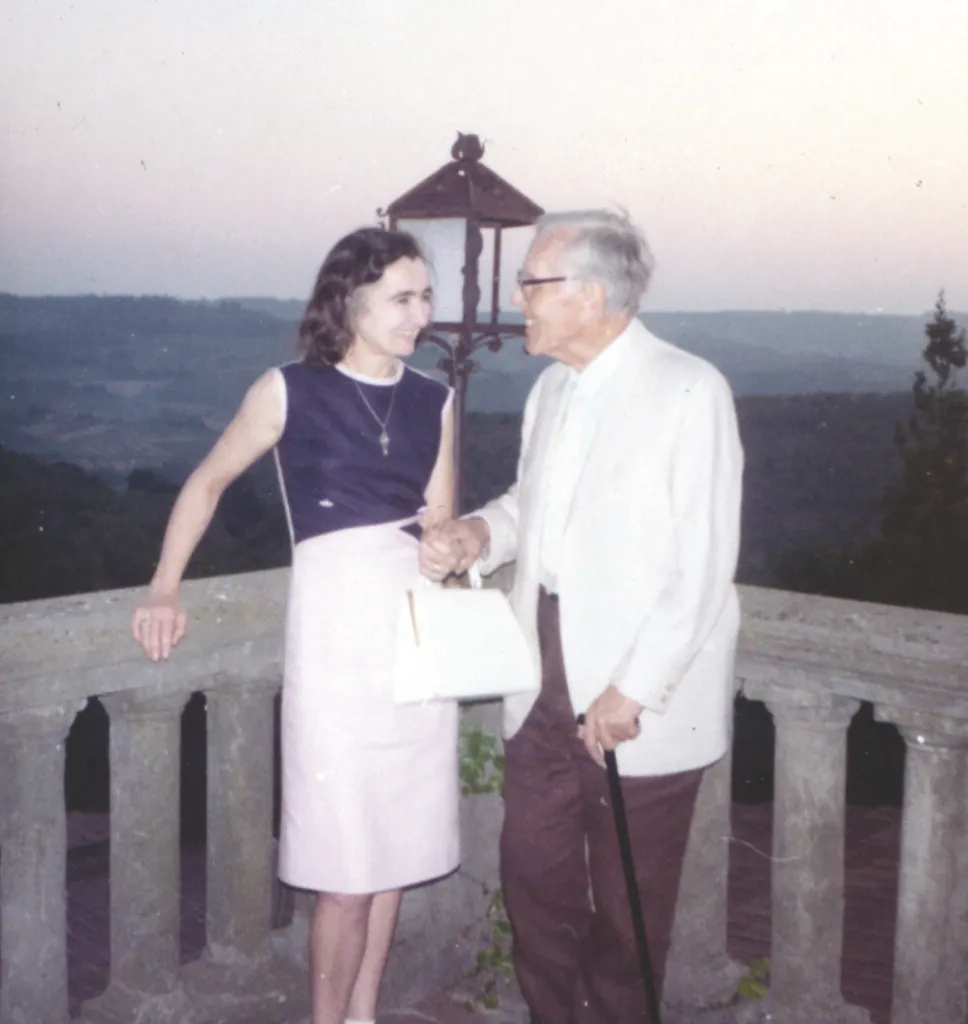
In conclusion, though my input has been brief, I believe I have shown why the von Hildebrand couple are correct in proposing the central importance of spousal tenderness, a proposition that Uno caro clarifies ‘plays a fundamental role, willed by the Creator.’ Since such tenderness completes the spousal ‘we’ by grounding the mutual indwelling of spouses in something fully intersubjective, in their lived experience, their life together can be formed by a unified principle that wholly pervades their bodily togetherness and unites them as ‘one flesh.’
This mutuality of tenderness can then rightly be called the ‘home’ of the spouses—the home they provide for one another, and the home they enter into in one another—and it is into this home that they can then welcome the children borne of their tender embrace ‘with the help of the Lord.’ And indeed, these very children then reveal a further dimensions of their spousal ‘we,’ in the inner orientation of this same ‘we’ toward the ‘bestowal of humanity,’ first, via procreation, and then via the exalted parental venture of education.[25]
Accordingly, here at the end, let us turn again to Shakespeare and affirm that this tender-clinging-knowing, here detailed, that seals the ‘marriage of true minds’; and let us perhaps also affirm that
If this be error and upon me proved,
I never writ, nor no man ever loved.
Appendix: Parental Tenderness
I would like to gesture toward a further dimension of the question which I had no time to develop in my paper, for there is another significant sense in which spouses ‘know’ and ‘cling’ to one another as ‘one flesh,’ and which is intimately connected with the understanding of marriage espoused by the von Hildebrands and other personalist thinkers. This further dimension is found in the way spouses concretize their ‘one flesh’ union with one another in the life of their children, when as the natural fruit of their tender embrace they conceive and bear life together, ‘bone of their bones, flesh of their flesh’ (see Gen. 2:23), so to speak, and in the further formation of these same children in the full stature of humanity. But what has this further dimension to do with spousal tenderness?
Well, I submit that spousal tenderness rightly understood is precisely what capacitates the couple to receive children as gifts from God, and that as beings in whom the spouses can rejoice as one; and moreover, I further submit that spousal tenderness is precisely what capacitates the couple to embrace their incumbent responsibility to educate these same children with the kind of tenderness that awakens the unique and varied personalities of their children—and thus smooth their path toward maturation. A first hint at their close connection is to be found in the line of Scripture upon which I have reflected, namely, ‘Adam knew his wife Eve, and she conceived and bore a son, saying, “I have gotten a man with the help of the Lord.”’ Does not the joining of these ideas in this singular verse reveal the profound connection of these two dimensions of marital love, the spousal and parental? And does it not also reveal that they are both to be understood and exercised from a personal perspective, precisely as an act of knowing in the I have here clarified? And finally, does it not further reveal how interwoven spousal and parental tendernesses are in the life of the souple and their family? I believe that it most certainly reveals all three; and just so we can see that the tenderness by which spouses embrace one another has the natural tendency to open outward into parental tenderness.
Furthermore, as so understood, we can then approach the dual meaningfulness of marriage and sex in a new light, inasmuch as we can see that the meaning of marriage for the spouses as individuals is spousal love (the first meaning of being ‘one flesh’), and that the correlated meaning of marriage for the spouses united with one another is the life of their children, realized in both procreation and education (the second meaning of being ‘one flesh’). These two meanings are then interiorly connected, since the first meaning of marriage as union is inwardly oriented by nature toward the second meaning of marriage as procreation and education. Then, looked at from the perspective of tenderness as such, we see that while spousal tenderness capacitates the ‘I’ of each spouse to transcend the confines of its singularity toward the realization of the spousal ‘we,’ parental tenderness capacitates this now constituted spousal ‘we’ to transcends the confines of its singularity toward the realization of the fullness of parental tenderness. Marriage is then essentially a union of love, since it is formed of spousal love and sealed by spousal tenderness; and marriage is essentially end oriented, since it is formed for parental love and accomplished in parental tenderness.
This new dimension of parental tenderness then redounds immeasurable to the tender love of the spouses, for in being broken-open to the expansion of their spousal love through the parental love they experience for their children (the ‘one flesh’ instantiation of their love), their spousal ‘we’ undergoes a profound expansion of its life together with a weighty deepening of its love. To see how this is the case, we need only think of the increased tenderness a husband feels for his wife when he witnesses the travail of childbirth and his wife’s gentle courage as she tenderly nourishes their children, and, on the other hand, the increased tenderness a wife feels for her husband when she witnesses his steadfast endurance in trials for the sake of providing for herself and their children by the sweat of his brow. And this is not yet to mention anything of the deep stirrings of the human heart that emerge within spouses when they encounter one another in the flesh of their children, in their eyes and the look of their eyes, and in the further depth of love that bubbles up in them as response to this ‘one flesh’ icon of their love that now exists unto eternity.
[1] William Shakespeare, All the Sonnets of Shakespeare, ed. P. Edmondson, S. Wells (Cambridge: Cambridge University Press, 2020), p. 214.
[2] See John Paul II, ‘”Knowledge” and Procreation (Gen. 4:1),’ in Man and Woman He Created Them: A Theology of the Body, tr. M. Waldstein (Boston: Pauline Books and Media, 2006); and for the final short quotation, see Augustine, Confessions, tr. Frank Sheed (London, Sheed and Ward, 1944), II.1.1, where he clarifies that the singular delight of the human—underwriting and pervading all delight—is found in loving and being loved.
[3] Victor Manuel Card. Fernandez, ‘Uno caro: Doctrinal Note on the Value of Matrimony as an Exclusive Union and Mutual Belonging,’ 21.11.2025, www.vatican.va.; referencing Alice von Hildebrand, Man and Woman: A Divine Invention (Ave Maria: Sapientia Press, 2010) pp. xiii and 58, respectively.
[4] See esp. Dietrich von Hildebrand, In Defense of Purity (Steubenville: Hildebrand Project Press, 2017); The Nature of Love, tr. J. Crosby (Steubenville: Hildebrand Project Press, 2012); The Heart (South Bend: St. Augustin Press, 2020); Marriage: The Mystery of Faithful Love (Nashua: Sophia Institute Press, 1992); Alice von Hildebrand, Man and Woman: A Divine Invention; The Privilege of Being a Woman (Ave Maria: Sapientia Press, 2002); and Karol Wojtyla, Love and Responsibility, tr. G. Ignatik (Boston: Pauline Books and Media, 2013).
[5] See Aristotle, Nicomachean Ethics, Bk. VIII; and Thomas Aquinas, Summa theologiae IaIIae, 26-8.
[6] Wojtyla, Love and Responsibility, p. 58; among others.
[7] Thomas Aquinas, Summa theologiae IaIIae, 28.2. The whole of q. 28, together with qq. 26-7, provide a wonderfully subtle analysis of the nature of the love of friendship, which Aquinas understands as the benevolence of love appropriate to the love of persons, in contrast to the love of concupiscence, which Aquinas understands as the love whereby we draw good things (including other persons) to ourselves and other persons. Interestingly, the Latin phrase Aquinas uses, ‘mutua inhaesio,’ connotes a mutuality of adherence, and thus a reciprocal clinging, and perhaps most interestingly, he is employing this phrase not only as an explanation of human friendship, but as a fitting interpretation of the scriptural verse, ‘he who abides in love abides in God, and God abides in him.’ (1 Jn. 4:16).
[8] Dietrich von Hildebrand, In Defense of Purity, pp. 75 ff.; emphasis added.
[9] Wojtyla, Love and Responsibility, pp.73-4.
[10] The sexual act is evidently a sui generis form of human behavior which creates the potential for such a union in ‘one flesh.’ This emerges as a possibility on the basis of the dimorphic structure of the human being, where man and woman are differentiated in ways that complement one another, so that sexual activity necessarily involves two bodily actors performing a singular bodily action, uniting with one another via their differentiated roles as the fitting dynamic complement of one another.
[11] I note here that while I develop the meaning of mutual indwelling in this way here, this further depth of understanding is certainly not excluded by the presentation of Aquinas (or Aristotle), but rather is arguably already implicitly contained in his presentation, even if not explicitly thematized (or even seen with clarity).
[12] Edith Stein, On the Problem of Empathy, tr. W. Stein (Washington, DC: Institute of Carmelite Studies Publications, 1989), p. 3.
[13] Tus we see how empathy secures the distinction of persons while also precipitating the possibility of their living in real experiential contact.
[14] Karol Wojtyla, ‘Participation or Alienation,’ in Person and Community, tr. T. Sandok (New York: Peter Lang, 2008), pp. 197-207: 206.
[15] Again, when we look to the Hebrew and Greek original of the English ‘to cling,’ ‘dābaq (בְּאִשְׁתּוֹ)’ and ‘proskollaō (προσκολλάω)’ respectively, we find that both signify ‘to closely adhere and hold fast,’ in addition to the Hebrew further signifying ‘to pursue.’
[16] This is the intentionality of the spouses before one another (and indeed, woman before man and man before woman), an intentionality that reaches its height in sexual intercourse when spouses embrace one another in their human nakedness, body and soul. Such an understanding is furnished by John Paul II in the Theology of the Body, where he leverages the technical understanding of intentionality provided by phenomenology. See John Paul II, ‘The Corruption of the Spousal Meaning of the Body,’ in Man and Woman He Created Them.
[17] Moreover, as mentioned immediately above, spouses bear ethical responsibility for this kind of knowing, lest they fall foul of a reduction of one another in the sexual sphere. Indeed, the paragraphs of Uno caro quoted at the outset conclude with an ethical insight of first import, namely, that ‘where tenderness reigns, concupiscence recedes,’ an insight that is also found in Wojtyla when he says that ‘tenderness, both in its interior orientation and in the exterior manifestations, differs from sensuality and from sensual use, so that neither one can be reduced to the other, nor identified with it.’ Wojtyla, Love and Responsibility, pp. 188. From these insights we see how tenderness excludes concupiscence as its natural contrary, and since concupiscence of the flesh is what primarily destroys the personal dimension of sexual activity, we discover from a negative perspective in what way the ‘one flesh’ union of marriage is finally secured by spousal tenderness.
[18] Wojtyla explains, ‘Tenderness is not only an interior ability to co-feel [on the basis of empathy], a sensitiveness to the other’s lived-experiences and the states of the other person’s soul. Tenderness contains all that, although that does not yet constitute its essence, which expresses the tendency to embrace the other’s lived-experiences and the states of the other person’s soul with one’s own affection. This tendency is expressed… for there is a need to communicate to the other “I” my concern for his lived-experiences or interior states.’ Wojtyla, Love and Responsibility, pp. 185-6.
[19] Though not my topic here, this holistic knowing includes the procreativity of the body, and thus also the children already conceived and born to the couple, as well as those yet to be conceived and borne as their family expands. However, this does not at all mean that the attention and intention of the couple should be upon their children, for should a couple’s attention and intention be upon anything but one another during the sexual act, in the holistic way here described, their fleshly union would be rendered impersonal to that same degree.
[20] Hildebrand, In Defence of Purity, p. 79.
[21] Ibid.
[22] Hildebrand, In Defence of Purity, p. 81.
[23] Further exposition and analysis would be needed to fully unveil the interpersonal structure of tenderness. At a first level, this would include providing a fuller exposition of the reverence that undergirds tenderness, and then the kind of empathetic attention and intention needed to bring tenderness into relief between spouses throughout their sexual congress; and it would then also involve thematizing the personal vulnerability by which spouses open themselves to one another, in body and soul, together with the new depth of giving and receiving made possible by such vulnerability, again in body and soul.
[24] Hildebrand, In Defense of Purity, p. 76, 81. Therefore, i seems to me that it is in virtue of this crowning of sexual knowing with tenderness that the intentio unitiva and intentio benevolentia are uniquely reconciled with one another in the intersubjective experience of the couple.
[25] This phrase, ‘bestowal of humanity,’ is used by Wojtyla when speaking about the great dignity and responsibility of parenthood. See Wojtyla, ‘The Family as a Community of Persons,’ in Person and Community, pp. 315-27.
