The Relationality of the Person
To be a person is an extraordinary thing, where 'being with the other is its form of being with itself.'
In previous essays (here and here) I outlined two essential truths of the person, those of personal subjectivity and personal substantiality, while I there also noted the tension that sometimes exists between these two features, with certain thinkers tending to emphasize one over the other, and to the cost of one another. Stepping aside this opposition, I there held that both are essential, and I noted that it is necessary to emphasize both in tandem with one another if one is to properly understand what it means to be a person. A third feature, the one I outline in this essay, is also sometimes stressed in ways that set it in opposition to personal substantiality—and again adverse ways—and this is personal relationality.[1]
Yet as I did with personal subjectivity I here set aside any controversy and focus on the relational dimension in a way that enhances our understanding of the person as a subsistent substance. As a result of this way of proceeding we will see that we not only come to an understanding of the relational in a way that is appropriately grounded and realistic, but we also discover that there is a fundamental paradox embedded in the meaning of being a person, a paradox that if rightly resolved becomes a key to unlock the mystery (and difficulty) of personal life.

The Primal Relationality of the Person
As a substance endowed with a rational nature the person has an immense capacity to enter into relation with the whole of reality, in all its dimensions, to all its things, and in all ways that matter. This holistic relational bearing is discovered in the most ordinary of experiences, in knowing, feeling, and willing, and in everything embraced by these elementary personal acts: by way of knowing we can enter into knowledge and understanding of things; by way of feeling we can be stirred by their corresponding value and place within the hierarchy of being; and by way of willing we can affirm extant goods while also striving for the realization of further goods. And just so, in such everyday experiences, we set ourselves in relation to the persons, things, and states of affairs of the world, while simultaneously discovering that we are able to reach beyond the boundary of our enclosed selves and attain union with reality—without at all thereby divesting ourselves of ourselves.
Now, what our rational capacity is here revealing is that we bear a spiritual nature. We see this most clearly, at least initially, when we compare the life of persons to the being of material things, for it is in this comparison that the contrast of matter and spirit becomes most evident. Matter is the expansive, massive, and energetic stuff that fills the natural world: as expansive matter spreads out in place; as massive it bears the weight of attraction; and as energetic it reacts with other pieces of matter. These are notable potencies, surely, but they also indicate the relational paucity of matter, for precisely as heavy and opaque matter is impenetrable to and exclusionary of the other. Moreover, because of this heavy opacity which is vacant of genuine inwardness, matter is utterly passive and blind before its relations, knowing no relationality, feeling no relationality, and willing no relationality. This means that matter is capable of possessing only a primitive form of relation, one that is merely spatio-temporal, with the upshot being that material things simply rest alongside one another in place, only attracting, repulsing, and interacting with one another over time; and nothing more.
Yet, in contrast to matter, and free of its dark weight (no negative overtone implied), spirit is able to set itself in relation to other things, by going forth from itself toward these things before inwardly permeating them and making them its own. In this way, spirit can unite with the persons and things of the natural world, and this is precisely what it does in all knowing, feeling, and willing, for in these intentional acts spirit, so to speak, pours itself forth toward the other while nonetheless remaining rooted in itself. Now, with this last statement we see most clearly the nature of spirit. Since spirit is able to be with the other while abiding in itself, spirit bears an inbuilt duality of orientation, possessing a capability to be intentionally present to something other than itself while remaining inwardly present to itself as the one intending. But this duality of presence is simply not possible for matter, since, as we’ve seen above, the nature of matter entirely excludes such interpenetration. Therefore, spirit can empty itself to its own gain, whereas matter poured forth is all loss. Joseph Ratzinger puts this plainly when he writes, ‘In transcending itself it has itself; by being with the other it first becomes itself, it comes to itself. Expressed differently again: being with the other is its form of being with itself.’[2] And indeed it must be so, for Ratzinger, since by a kind of existential ‘necessity’ the personal spirit must pour itself forth if it is to preserve and realize itself, and finally if it is to perfect itself.

Awareness—Clarifying Things
Now, though the essential character of spirit—its duality of presence—is clearly revealed in the intentional acts of knowing, feeling, and willing, it is perhaps no more evident than in the most primitive feature of personal life, in the awareness and self-awareness that accompanies our intentional life in all knowing, feeling, and willing. ‘Awareness-cum-self-awareness’ is that personal capacity by which the world comes to appearance for someone, with awareness facilitating the appearance of the world, and self-awareness its appearance for someone. The consequent simultaneity of presence—in our being oriented outward and inward at the same time, with the objectivity of awareness united to the subjective of self-awareness—clarifies for each one of us the fundamental nature of our being. Since, as we have seen, such relational duality is impossible for matter, this primitive feature of personal experience reveals our spiritual nature with lucid clarity, and it does so at each and every moment of our waking lives.
And just so we discover two things of utmost importance, namely: that reality has two primary regions of being, those corresponding to spirit and matter; and that to be a person is to be a spirit, and to be a spirit is to be a person.
Moreover, we then also see with great clarity that embedded in our outward relation to the world is a fundamental relation to the self, so that while we are most certainly outwardly oriented in all that we ordinarily think and do, we are also always inwardly grounded—for this is the only way we can be a self. And we further see that because this duality of awareness is embedded in all our intentional acts these same acts possess their inward transparency such that we are aware that we know, aware that we feel, and aware that we will—for this is the only way these acts can be known as mine or yours. And finally we see that its is through this embedding that we are able to draw the world back to ourselves so that what is objective about the world can become something properly subjective for the personal self—for this is the only way we can make the world our own through experience. (Note: I already drew attention to this feature of personal life in my essay on personal subjectivity, since this duality of presence is evidently essential to subjectivity as such, and what we are here seeing is simply that this duality is entirely derivative of our spiritual nature.)
And so again here we discover two things of importance, namely: that reality has two primary modes of being corresponding to subject and object, and which are here loosely paralleled by spirit and matter; and that to be a spirit is to be a subject, and to be a subject, at least in its proper and full sense, is to be a spirit.
Finally, on the basis of this givenness of the self for the self, and in tandem with the near total flexibility of our intentional faculties, we can turn our intentional acts back upon ourselves and experience ourselves in an objective way—and thus in a manner quite different from the always-already subjective givenness of the self. In such self-referential acts, we take the self as the object of our experience, coming to know ourselves in acts of cognition, feel for ourselves in acts of affection, and affirm ourselves in acts of willing. We are then at one and the same time the subject and object of the intentional act, standing at both poles of the act simultaneously, as the subject directing the act and as the object to which the act is directed. All this is then captured most simply whenever we say something like, ‘I am me,’ where ‘I’ articulates the subject of the knowing act and ‘me’ its object. This second type of self-relation (the objective) then deepens the primary type of self-relation (the subjective) by undergirding all subsequent intentional experiences with a greater depth of interior grounding; and with this depth a more intense capacity to be present to the outer world in each and every experience. It is then precisely in this movement toward the depth that we move from a shallow superficiality to a genuine personality, and the world itself becomes a more deep and meaningful place for us.
And just so we discover a final thing of importance, namely that that personal spirit distinguishes itself from the material thing thing by the depth of its capacity for relation.
Obviously, to be a person is a most extraordinary thing: Persons are, so to speak, in the world but not of the world.
The Developmental Relationality of the Person
Now, this ‘other-relational-cum-self-relational’ capacity of the person goes still further, for persons have the capacity not only to set themselves in relation to the whole outward world, but precisely in so transcending themselves they can draw this same world back to and make it one with themselves. Persons do this whenever they embrace the truth, value, and goodness of the world, before receiving this meaningfulness into themselves and making it their own—where it then becomes part of their very being, as something that informs and structures their inner life.
This capacity is beautifully detailed by Edith Stein:
The soul is the ‘space’ in the middle of the body-soul-spirit whole. As sensitive, the soul dwells in the living-body, in all its members, shaping and preserving the body, while also receiving from it. As spiritual, the soul rises above the self and looks out upon the world, entering into dialogue with the world and receiving from it. But as soul in the most proper sense, the soul is the dwelling place of the personal I, the I that faces the world and gathers into itself everything received from this encounter with all that is other. What is therein gathered becomes our most personal property, an integral part of the very self—what, figuratively speaking, becomes ‘our flesh and blood.’[3]
And when she continues,
The soul is then not point-like, like the personal ‘I,’ but rather is something spatially expansive. Truly, it is an interior ‘castle,’ a dwelling place with many rooms, a home within which the personal I dwells and throughout which the I can move about freely, at times outward, at times inward. This interior expanse is then not ‘empty,’ even while the fullness of the world can enter it and be taken up by it. And indeed, it must be so if the soul is to unfold its own peculiar life in the unfolding of the individual.[4]
Now, much could be said about this illuminating passage, especially given its dense, character, but I wish here only to highlight that aspect of the text that reveals the profound relation of the personal self to the world in which we find ourselves—and in fact, as indicated, by way of a kind of structural mirroring. Though the person is a subsistent substance (having being in itself and by virtue of itself, with a degree of independence unparalleled in the natural world), because persons bear a spiritual nature they are capable of reflecting the entirety of the exterior world within themselves in a kind of relational mirroring. Persons do so by interiorizing the meaningfulness of the persons, things, and states of affairs of the outer world, its truth, value, and goodness, by slowly, through time and experience, incorporating this meaningfulness into themselves in cognition, affection, and volition. This interiorization evidently inaugurates a profound personal relation within the person, when the person comes to recapitulate the meaning of the created cosmos within their own spiritual soul.
Resolving Our Paradox
Here at the end let us return to the controversy I mentioned at the outset, the one that arises from our unfortunate propensity to stress one dimension of being a person at the cost of others. According to the understanding of relation detailed here, when taken together with substantialist dimension detailed in the last post, we see clearly that the controversy setting personal relationality and substantiality at odds seems to arise from failure to attend appropriately to the spiritual nature of the person as a subsistent substance. Once the subsistent person is understood to be the bearer of a spiritual nature, and once that nature is rightly understood in its inherent duality—in its being turned outward while remaining inwardly grounded—any suggestion of competition between these two dimensions entirely evaporates, for we then see that subsistent persons must exist in relation to others—and, with priority, to other persons—if they are to realize the meaning of their subsistent being; and moreover, that to do otherwise would be to ‘fail’ to be a person, through a failure to realize the meaning of one’s own being in the dynamism of one’s own life.
In future essays, I will look more closely at the specifically personal when I take up the theme of personal relationships and discuss community and friendship, and we will there begin to see the proper expanse of the relationality of persons… but for now let us look at the specifically Christian by the inclusion of a theological postscript.
Postscript: The Person as Gift
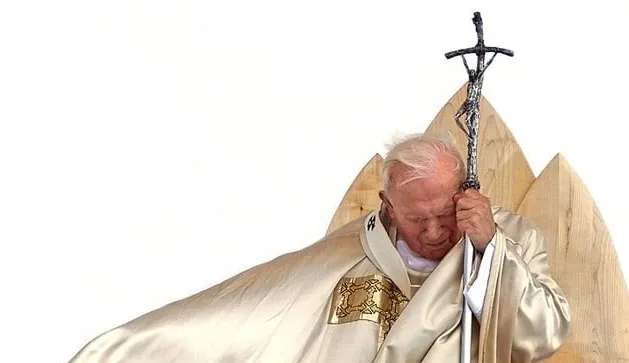
For those who are Christian, the conclusion of this essay likely brings to mind the paradox Christ repeats in the Gospels (in all four, to a total of six times), when he variously says ‘we must lose ourselves in order to find ourselves’ (Mt. 10:39, 16:25; Mk. 8:35; Lk. 9:24, 17:33; Jn. 12:25). And it probably also brings to mind the way personal love is set forth in the Gospels, particularly as it is exemplified in Christ’s own life, and as it is explained by Him when He says, ‘greater love has no man than this, that a man lay down his life for his friends’ (Jn. 15:13). We experience this most fully in the liturgy of the Church when we discover ourselves caught up in the redemptive love of God, Who reaches out and establishes us in friendship with Him while we are still entangled in sin. By Christ’s death—which we re-member at every Eucharist, and in a special way on Good Friday—He makes true of His declaration of personal love, when at the Last Supper He says: ‘I have called you friends’ (Jn. 15:15), while also manifesting the full extent of this love, a love that extends ‘even to death on the cross’ (Phil. 2:8). And with all this, Christ simultaneously teaches us that this very modality of relating is the very shape of personal life rightly understood, for it is the kind of life that loses itself so as to find itself. And the end result is precisely what Christ wills for each one of us, when a little earlier at the Last Supper He exclaims, ‘abide in me, as I in you’ (Jn. 15:4), in order to spell-out what exactly He means when He later prays to the Father ‘that all may be one even as we are one’ (Jn. 17:22).
Union through relation, relation through self-gift and self-sacrifice (two sides of one coin), this is the essence of being a person, this is our destiny as spiritual creatures, a destiny that is is realized nowhere else than in the resolution of the paradox of being a person—self-realization through self-gift—in the very dynamism of personal life.
[1] A famous proponent of the aspect of relationality, Joseph Ratzinger, puts the matter in the following way, ‘Relativity toward the other constitutes the human person. The human person is the event or being of relativity.’ Joseph Ratzinger, ‘Concerning the Notion of Person in Theology,’ in Communio: International Catholic Review, 17.3 (1990), pp. 439–54: 439. Though Ratzinger is explicit in his position that the substantialist position is deficient, and though he tends to so emphasize the relational dimension in ways that seem to eclipse personal substantiality, as is clear from the above, I believe it is possible to secure the concerns of both sides in the controversy, and indeed that it is only by securing both that each can be understood properly and fully.
[2] Ratzinger, ‘Notion of Person,’ pp. 439–54: 451.
[3] Edith Stein, Endliches und ewiges Sein (Freiburg: Herder, 2013), pp. 317-8; translation my own.
[4] Ibid. Evidently Stein is here using spatiality in a metaphorical sense.
